FAQ – Choosing the Right Magnetic Flow Energy Meter
Expert guide on selecting magmeters. Covers conductivity requirements, thermal energy measurement, and how to match sensors to industrial applications for maximum accuracy.
FAQ – Choosing the Right Magnetic Flow/Energy Meter
Based on common questions from engineers and plant managers.
Q1: What is the minimum conductivity required for a magnetic flow meter?
Most mag meters require fluid conductivity between 3 and 5 µS/cm. R&B meters work reliably down to 5 µS/cm. For lower conductivity (e.g., demineralized water), other technologies (like ultrasonic) may be needed.
Q2: How do I choose the right liner and electrode material?
- Abrasive slurries → Hard rubber, polyurethane, or ceramic liners + hardened electrodes (SS316, HC, HB, titanium, tantalum)
- Corrosive chemicals → PTFE or FEP liners + tantalum or Hastelloy electrodes
- High temperature (>80°C) → FEP liner with remote electronics (up to 180°C)
R&B provides free material selection advice – just send your fluid composition.
Q3: How much straight pipe is required before and after a mag meter?
For inline mag meters: at least 5 pipe diameters (5D) upstream and 3D downstream.
For insertion mag meters: typically 10D upstream and 5D downstream.
R&B meters follow these industry standards. If your site has severe space constraints, contact us for alternative solutions.
Q4: Can I use a mag meter in a partially filled pipe?
Standard mag meters require full pipe condition. For partially filled / gravity flow pipes, R&B offers the RBEF‑P series – a specially designed electromagnetic flow meter with built‑in level measurement (velocity‑area method). It works from 10% to 100% liquid level.
Q5: What power options are available?
- Mains powered – 85‑265V AC (standard)
- Battery powered – for remote locations with no power supply (R&B offers 3‑5 years battery life)
- Solar ready – for off‑grid applications
Q6: Do I need a sanitary mag meter?
If you measure food, beverage, dairy, or pharmaceutical products – yes. Sanitary meters must meet 3A, EHEDG, or FDA standards. R&B provides tri‑clamp connections, electropolished surfaces, and CIP/SIP compatible designs.
Q7: How do R&B mag meters compare to premium global brands (Endress+Hauser, Krohne, Yokogawa)?
R&B delivers the same or better accuracy (±0.2% to ±0.5%) at 20‑40% lower cost. We also offer shorter lead times (2‑4 weeks vs. 8‑12 weeks) and flexible customization. Many customers have successfully replaced premium brands with R&B.
Q8: What diagnostic features should I look for?
Advanced diagnostics help reduce downtime:
- Empty pipe detection – alarms when pipe is not full
- Electrode coating alert – warns of insulating buildup
- Partially filled pipe measurement (RBEF‑P series)
- Heartbeat‑like self‑check (available on select models)
Q9: Can I install a mag meter without cutting the pipeline?
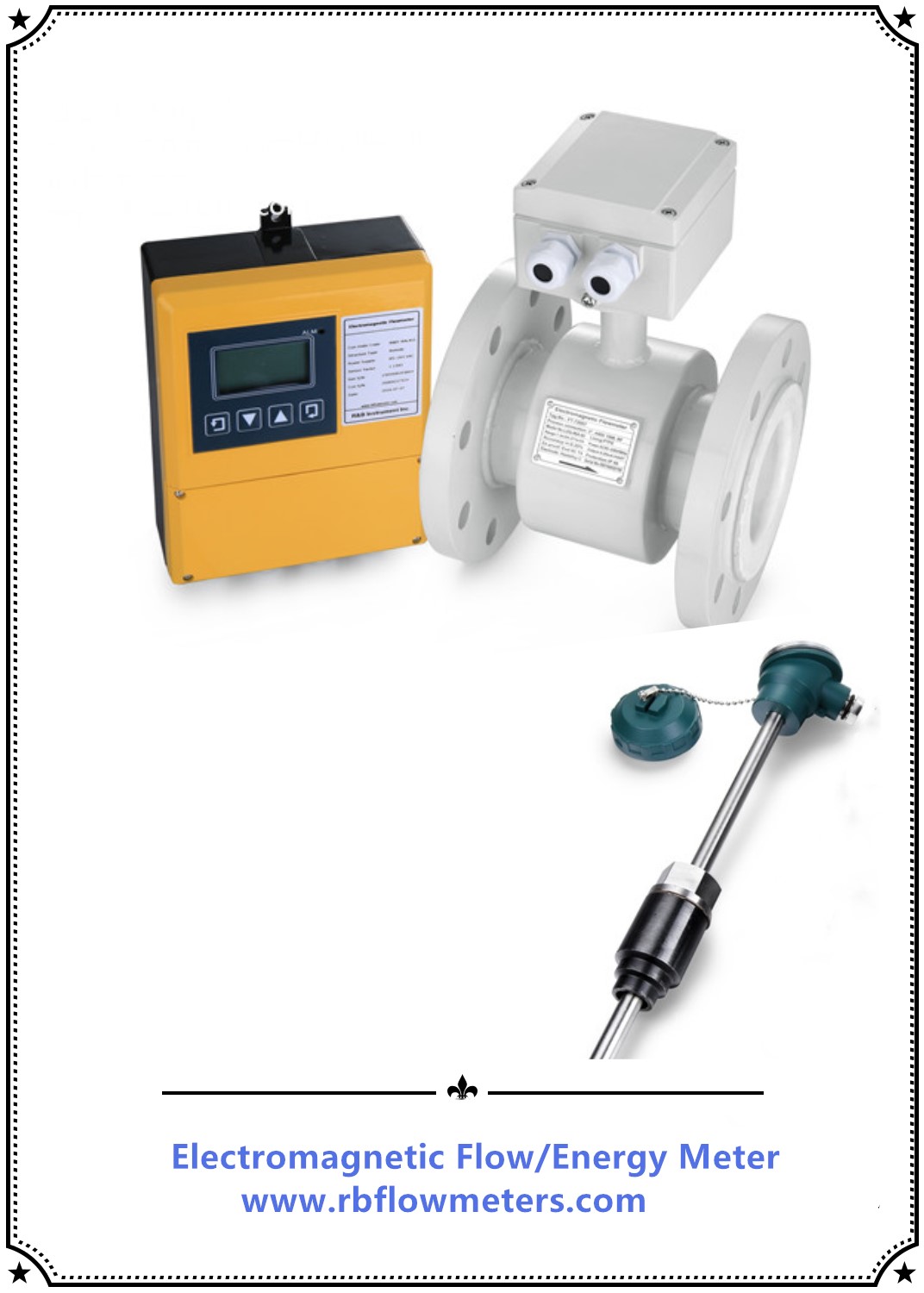
Yes – use insertion mag meters. They are installed through a small tap (hot tap possible), without cutting or welding flanges. Ideal for large pipes (DN200‑DN3000) and retrofits.
Q10: How do I get a quote or technical recommendation?
Send us your process parameters:
- Fluid name and conductivity
- Operating temperature & pressure
- Pipe size and material
- Required accuracy and output signal
- Any special requirements (abrasion, corrosion, sanitary, etc.)
???? Email or message us – we will reply within 24 hours with a datasheet and competitive quote.
---