FAQ: How to Eliminate Noise in Slurry Flow Measurement?
Q: Why is my magmeter signal fluctuating when measuring slurry or pulp? A: This is a classic challenge known as "Slurry Noise." When solid particles (like ore pulp, paper fiber, or sand) collide with the electrodes, they cause a micro-electrochemical reaction. This generates a random voltage spike—noise—that traditional low-frequency magmeters cannot distinguish from the actual flow signal. The result is a jumping display and unstable control.
How RB Flowmeter Solves the Slurry Noise Problem
To achieve stable and accurate measurement in harsh slurry conditions, we implement three layers of noise reduction technology:
1. Advanced Multi-frequency Excitation Technology
- Unlike standard meters that use a single low-frequency pulse, our RBHEF-LS Series utilizes Multi-frequency Excitation.
- The Logic: It combines low-frequency components (for zero-point stability) with high-frequency components (to "outrun" the noise spikes).
- The Result: The converter can sample the flow signal at a rate that effectively cancels out the friction noise caused by solid particles.
2. Specialized Electrode Material Selection
The chemical stability of the electrode surface is crucial. We offer specialized materials to minimize electrochemical interference:
- Hastelloy C / Titanium: Provides a stable passive layer.
- Tantalum: Ideal for highly corrosive slurries, ensuring minimal potential drift when particles hit the surface.
3. Intelligent Digital Filtering (RBHEF-89 Converter)
Our latest E8900/RBEFC converters are equipped with sophisticated algorithms:
Damping Control: Adjustable damping time constants to smooth out transient fluctuations.
Smart Spike Rejection: The software identifies and filters out the sharp "peaks" characteristic of slurry noise without lagging the actual flow response.
Engineering Tips for a Cleaner Signal
Even with the best technology, installation is key to noise reduction:
- Rigid Grounding: Ensure a grounding resistance of < 10Ω. Slurry measurement is extremely sensitive to stray currents in the fluid.
- Full Pipe Requirement: Ensure the sensor is installed in a vertical upward flow or a low point in the pipeline to guarantee a 100% full pipe, preventing air bubble noise.
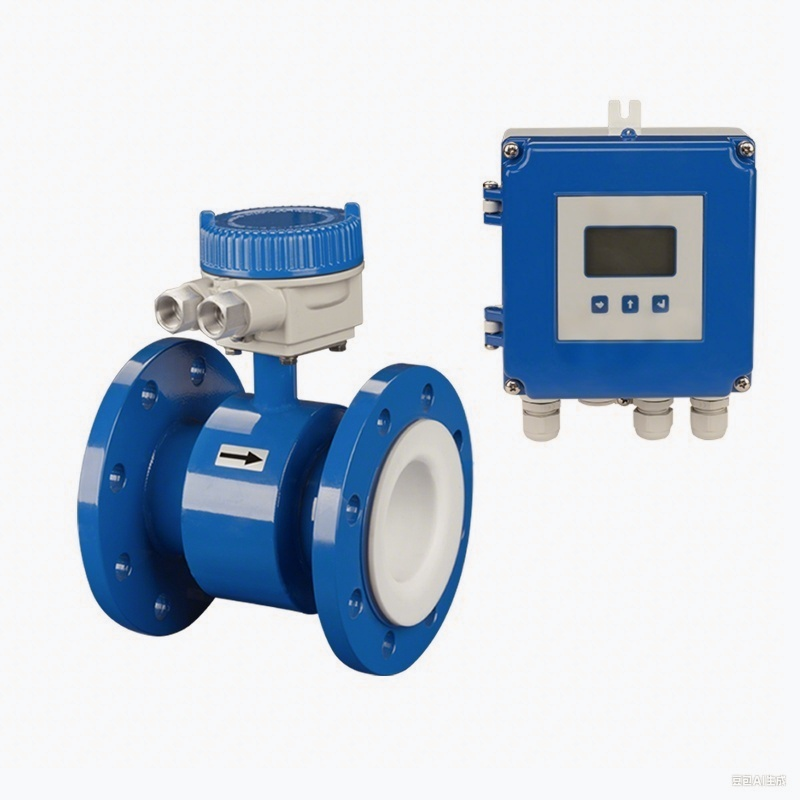
- Shielded Cables: For split-type installations, always use dedicated shielded signal cables and keep them away from high-power frequency inverters (VFDs).
Do you need a stable flow solution for your mining or paper plant?
[Learn more about our Multi-frequency Magmeters here.]